 by
by FIND YOUR VOICE THROUGH PLAY.
We each have our own artistic voice, an individual way of expressing ourselves visually, just like we have a unique speaking voice, individual fingerprints, and a face that looks like no one else’s. We may not find it easy to express our voice. It may be hidden and buried under the surface by the experience and the noise of life. Why is it so difficult to access? We can be worried about pleasing people. Or perhaps when we were young, others criticized our artistic abilities. Schooling has taught us not to think for ourselves. We may lack confidence and belief in ourselves. We might need to spend time to make a living or care for other people. We want to do the right thing and fear getting it wrong. There could be many reasons.
But your voice is already inside you. You already have your own style, although you may not be aware of it. It just needs to be uncovered.
How can you discover your own voice and tap the deeper parts of yourself? You will need to learn some basic technical skills in order to paint well, but you also need to stop and decide who you are and what you have to share with others. Ask what interests you. What do you like? What do you want to say in your art? Without thinking about who you are, you can’t find your own voice. When art teachers tell you what and how to paint, they are thinking for you, giving you instruction, and you may struggle to hear your own inner voice.
One way to uncover your voice is to PLAY. Experiment in your art; try new things; discover the techniques that you love. But remember: what matters is what you think! Notice your feelings. Make it fun, and find the things you enjoy. You will learn more about yourself and your voice.
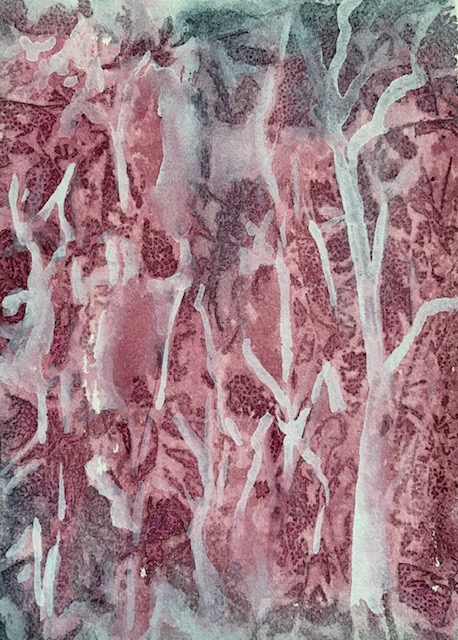
‘Ghostly Trees’ Watercolor/Gouache Experiment.
WHY PLAY?
Do you believe play is juvenile, undignified, not acceptable? A waste of time that should be spent producing something “valuable”?
Have you forgotten how to play? Do you keep busy with chores and not allow yourself to play?
Do you not see the value of play? Are you afraid of taking chances? You may need to play more, not less.
“But why do I have to play?” you ask. Why can’t I just take some serious painting courses and have someone give me the shortcuts to making a good painting? Simply because there are no shortcuts – and taking a class will not tell you who you are.
Enjoying play and exploration is where your growth will occur (whatever your painting style or choice of subject). This approach makes the practice of painting more exciting and fun. Focusing on play, instead of a “good” final result and a “finished” painting, will help you generate new ideas, find your voice, relax, and loosen up your art. It will help you put your voice and “life” into your painting
Play may initially seem silly and not serious, but when I began to play during painting, I began to have more fun, to paint more, and to notice my own feelings and ideas rather than worry about what others would think of my work. I’ve come to feel that forcing and pushing ahead with my head down is NOT necessarily more worthwhile than using my time by following my curiosity or playing. Playing can absolutely be serious art! Playing is a valid way to fuel your work and improve your art. You may begin to notice patterns, repeating ideas, and techniques that you especially enjoy.

‘Inky Woods’ Watercolor/Ink Experiment.
RE-LEARNING HOW TO PLAY.
Picasso, one of the most influential artists of the 20th century, once said, “Every child is an artist. The problem is how to remain an artist once we grow up.” He is suggesting that children, by their very nature, are naturally creative and expressive. They approach the world with openness and a lack of self-consciousness that allows for pure artistic exploration. They play!
But as we mature, we often lose this childlike sense of wonder, freedom, and creativity due to societal pressures, our education, and a fear of receiving criticism or making mistakes.
How can we re-learn our capacity for play and “remain an artist once we grow up”?

‘Wild And Bright’ Watercolor Play.
HELPFUL TIPS:
To learn to play, you can
-Create a safe space, where you won’t be judged, attacked, or controlled (by other people but also by your own inner critic), where you’re comfortable, can feel free and uninhibited, not afraid to make mistakes. Everyone makes mistakes, so don’t worry that a mistake means you’re a failure as a person – instead, it means you’re experimenting, learning what works, and improving in your art.
-Nurture a positive mindset and an open mind. Do not judge or criticize yourself. Strive for a loose, easy, confident, adventurous, relaxed attitude. Try new things. Ask open-ended questions of yourself to spark new thoughts. Set aside expectations. Focus on the journey of discovery and enjoyment rather than striving for a perfect outcome.
-Explore things that naturally interest you to foster motivation. Follow your curiosity. Keep acquiring knowledge.
-Take small steps toward goals. Set aside a specific, small amount of time most days, and set a timer – 15 or 30 minutes – you decide. See what happens without expectation. Explore!
-Experiment by trying different techniques and materials to learn new skills in a fun way. Use whatever medium, colors, and marks you feel like. Be flexible and willing to change. Try it. Keep going. Be bold! Your playtime is for you alone.

‘Light’ Watercolor/Ink Experiment.
-Give yourself some limitations or boundaries. Set yourself some small challenges to stimulate new ideas to try. For example, use only one brush for an entire painting, or paint a painting in monochrome (using only one dark color), or try surrounding some very intense colors with mixed grays in a painting. Even if you don’t think it will be fun, it will shake things up.
-Observe and notice. Allow yourself to daydream occasionally. ( Young children explore, imagine, and notice the new and unusual.) For a time, let go of the distracting thoughts of to-do lists, chores, other responsibilities, so you can hear yourself think, so that you can notice your feelings. If your mind is busy and worried, you may lose your thoughts in the shuffle of daily life.
-Trust your intuition. Everything begins with feeling and your unconscious thoughts. Get in touch with yourself. Be aware. Pay attention to your inner voice that tells you when something feels right or feels good or pleases you; don’t ignore your gut feelings – follow them. Don’t wait for another’s directions to tell you what you should do – it’s ultimately up to you to decide what matters to you.
-Practice.Repeatedly engage in activities (with slight variations) to help build muscle memory and solidify skills and make discoveries. Make learning enjoyable.
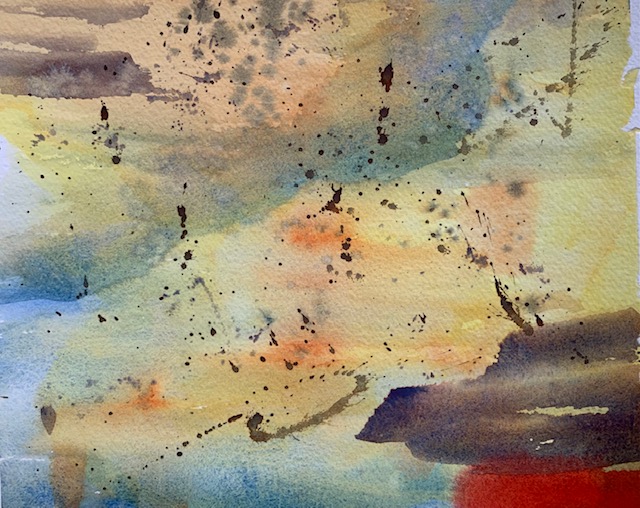
‘Soft Landscape’ Watercolor Painting.
IN SUMMARY.
Enjoying play and exploration is where your artistic growth will occur. Your painting will become more exciting and fun. Focusing on play, instead of a “good” final result and a “finished” painting, will help you generate new ideas, find your voice, relax, and loosen up your art. It will add creativity and “life” to your painting. Playing can be serious art.
Join me and get painting tips, inspiration, recent art news, or information about new art or products for sale, sent to you by email. Subscribe here. I’ll give you a free copy of my Color Blending Tips pdf. that you can download and print.
 Lee Muir-Haman Watercolor Painting
Leave a comment