 by
by Our culture (parents, school, jobs, social media, trends, sometimes peers) teaches us to look outside ourselves for our value, for answers to questions about ourselves and our lives and our art, for whether we’re doing things right, for what we should do, for whether it’s okay to feel valued. We may have been taught about how selfish it is to want things for ourselves, to put ourselves first. We come to understand that sacrificing, being productive and busy, and giving are good. We’re urged to fit in, not be different. Soon we may not know who we are anymore or what we think. We learn to look for others’ opinions rather than trust our own decisions.
If we’re always asking what others think, and don’t check in with ourselves to see if that actually lines up with what we think and feel, we’re giving away our power and not valuing our own ideas, interests, and choices. We all want to be accepted, but if we block access to our inner voice, then we trust ourselves less and less over time. We become less able to make our own decisions and to even know what we like, want, or feel. Intuition and creativity become much less accessible to us.
Instead of trusting our decisions less and seeking approval from others, wouldn’t it be nice to VALUE our own opinions and preferences? It’s a very good feeling to know we don’t need to check with anyone to make decisions. Value your own voice, and you’ll be able to trust that you can accomplish greater things: whatever you choose to work toward and believe you can achieve will become more and more likely. We all have more agency in our lives than we may have been taught to believe. We don’t have to wait for others to give us permission to do something we’d love to do.
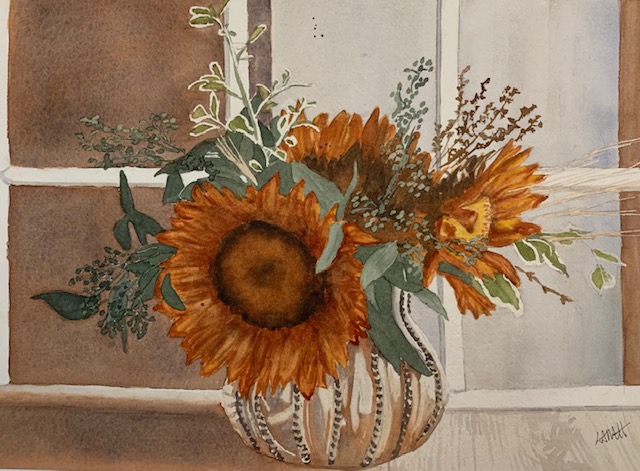
‘Sunflowers’ Watercolor Painting.
GET TO KNOW YOUR OWN FEELINGS, AND LET THEM SHOW:
Once you’ve decided you want to get more acquainted with your creative self, where do you begin? How do you jumpstart the creative process? First, be yourself; you are original. Your point of view is different from everyone else’s. It’s okay (perhaps even necessary) for an artist to have opinions, be different from other people, be an individual. There’s nothing to fear. Tap your inner resources to find your own responses to life’s experiences. What makes you happy, angry, calm, nostalgic? What gives you joy? What kind of painting do you enjoy seeing or creating? Use your EYE, MIND, AND HEART in your artwork. Don’t wait for instructions. Decide to follow your own artistic urges. Strive to make your art your own and not to copy; copying may seem easier but tends to deny your uniqueness and to stifle creativity.
Don’t be in a rush! Take the time to get to know yourself. Don’t be afraid of quiet or alone time – it gives you the space to hear your own thoughts, which are valuable and important, even if you worry that they’re not. Get beneath the surface, and observe your reactions to what goes on in and around you, allowing yourself to NOTICE details you might have missed. This patience and openness will allow you to recognize the invitation of INSPIRATION, whether the stimulus is an idea, a hunch, a thought, or an impulse.
It is not easy to create art that expresses your feelings and personality, especially if you’ve been made to doubt yourself before. You may need to get to know yourself better and begin to identify what truly interests and excites YOU, AND you need also to accept that your own ideas are valuable. Stop putting yourself down. Instead of looking to other artists by painting what they paint in the same way they paint it, don’t be afraid to do it your way. Painting just like someone else does not mean your art is ‘good.’ What makes you an individual is what will develop your painting VOICE. It’s your feeling about a work that helps the viewer to connect, on an emotional level, to your picture. Strive to show an imaginative, original, unusual, fun, or perhaps even surprising viewpoint. Experiment! Painting like ‘you’ will make your art ‘good’ – it will come alive.
Your heart knows the way. Run in that direction. (Rumi)
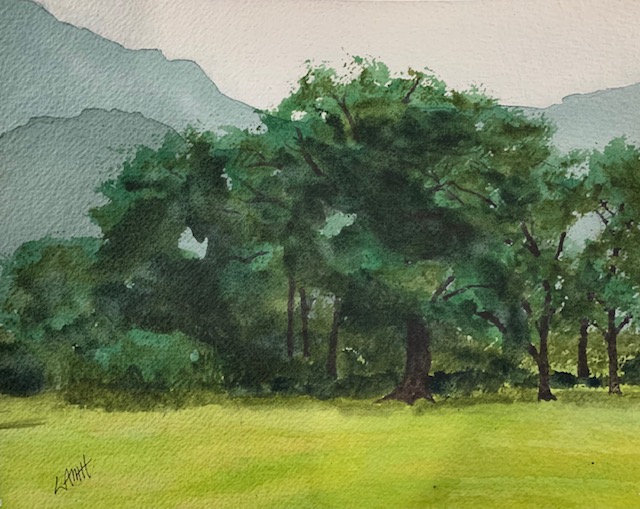
‘Green and Overcast’ Watercolor Painting.
HOW?
Sometimes you don’t know where to start to create your ‘original’ art. I remember not knowing how to design a painting or even what I wanted to paint. I felt at a loss and uncertain. I had to get to know myself better AND become more confident even while I was learning more about art. I needed to reconnect with my own intuition and become more aware of my own preferences and feelings. And trust myself. That kind of growth is not likely to happen all at once – it certainly didn’t for me. There are no shortcuts. I often felt that I knew better what I didn’t like than what I did like. Gradually and with practice, though, I noticed being drawn to some topics, some compositions, techniques, and styles more than others. I found myself wanting to eliminate certain parts of a reference that didn’t feel right to me or to combine two reference photos to build a scene more interesting to me. I was even excited to take some of my own photos to use for reference. With time, I began to acknowledge my own independence and to value my own opinion. It will remain an ongoing process; it isn’t always easy. My goal is to wean myself from any dependence on others’ photo references, to paint outdoors occasionally, to paint from life or my imagination.

‘Tristan’s Road’ Watercolor Painting.
NOTICE.
Experiment and try new things. Notice where you lose track of time and fall into the enjoyment of painting. Are you fascinated by landscapes and paintings of the outdoors? Do you prefer flowers, or a still life? Could you spend all day exploring colors? Does it thrill you to see paint flow? Or would you rather paint lots of details close up?
There is no formula. What do you want to create? What would you paint if no one was looking? What makes you happy? What do you always return to in your art? That is your inspiration.
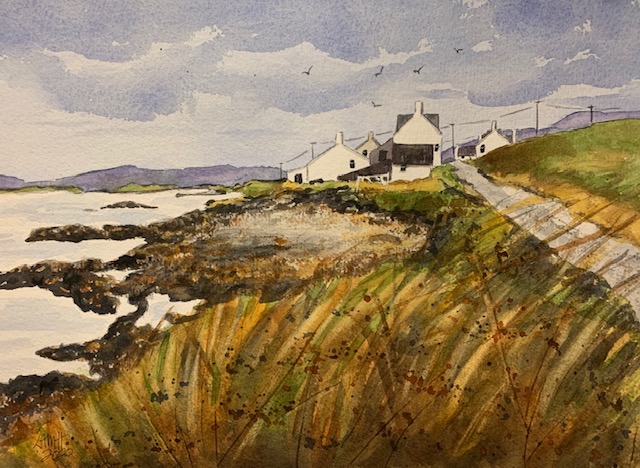
‘Windswept Cottages’ Watercolor Painting.
DON’T FORCE.
You cannot force insight or creativity or intuition, but you can be open to them. Find a place of calm inside yourself, not of fear, self-doubt, or anxiety, to better notice your thoughts and intuitions. In other words, a fearless open mind will invite creativity in.
Aim to get to a place where you’re simply EXPRESSING yourself, not worried or concerned about results and what others think. Don’t think about making ‘art’; just do your painting without big expectations or overthinking. A learning experiment or playful sketch is just as valuable and worthy of your time as a finished ‘painting.’ The goal is improvement and enjoyment, not rushing to the end product.
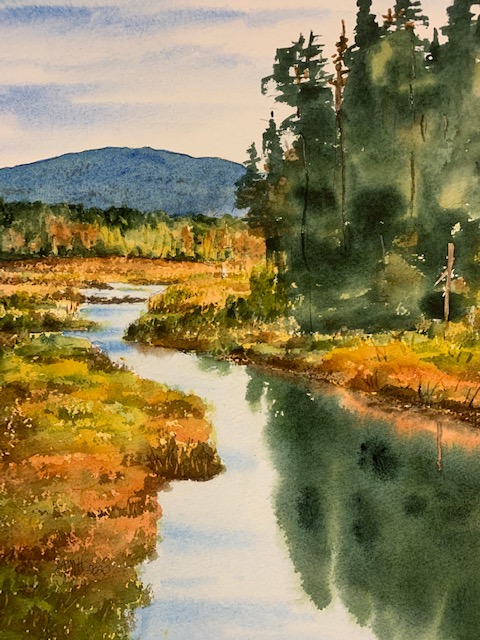
‘My Swamp’ Watercolor Painting.
IN SUMMARY.
Despite mass production, mass marketing, and mass media, it is important to remember that an artist needs to be independent of pressure groups and popular opinion. Have the courage not only to say no to superficial trends, but to say yes to your own emotions, thoughts, and creative impulses.
Trust yourself. Look to your self for answers. Your ideas are valuable. Don’t change what you like, who you are, what you feel in order to please someone else. Don’t apologize about how you feel or where you are in your work. Creativity has a lot to do with being aware of and feeling our own emotions, not in denying how we feel or looking for validation from outside ourself. (You may find occasional help and feedback useful, but remember: you ultimately know what’s right for you and your art.) The best way to improve your art is to worry less about what others think. And keep painting.
Join me and get painting tips, inspiration, recent art news, or information about new art or products for sale, sent to you by email. Subscribe here. I’ll give you a free copy of my Color Blending Tips pdf. that you can download and print.
 Lee Muir-Haman Watercolor Painting
Leave a comment